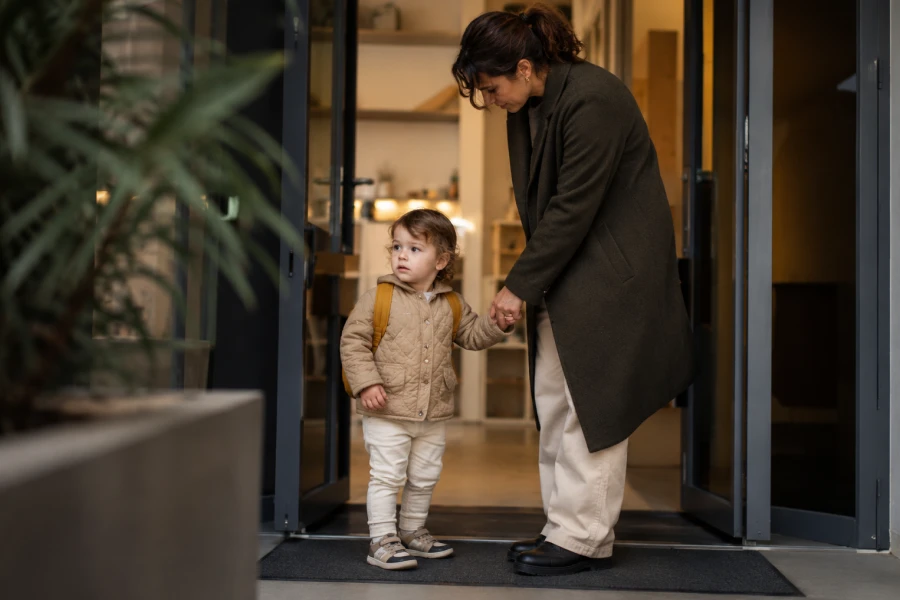
The hardest part of daycare often happens before the day truly begins. Daycare drop off anxiety can fill the car, the hallway, and the classroom doorway with tension. Parents may feel watched, rushed, judged, or torn between work and comfort. Toddlers may feel confused by the shift from parent to caregiver. Everyone is carrying something in that brief transition. A better morning routine can lower the emotional volume. It helps parents leave with more confidence. It also helps toddlers understand the pattern more clearly. The parking lot is only the setting. The real work is emotional preparation.
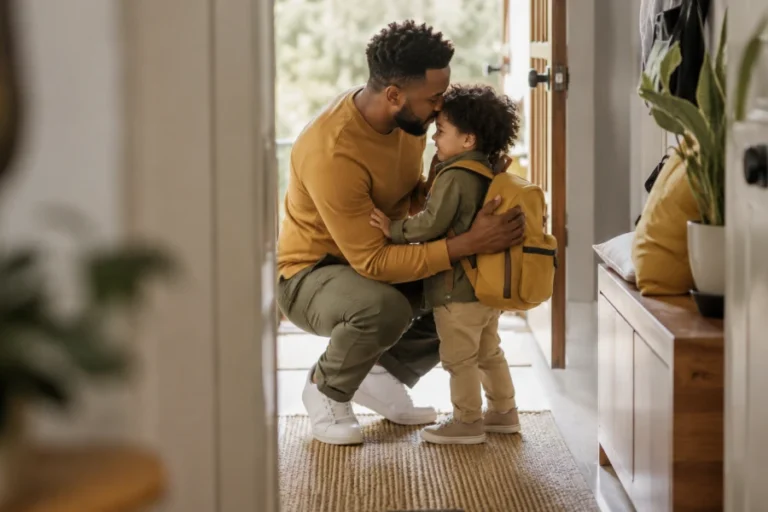
Toddlers read parent confidence quickly. A hesitant goodbye can make the separation feel unsafe. This does not mean parents should hide all emotion. It means the adult leads with calm clarity. Prepare your sentence before entering the room. Keep your body language warm and steady. Hand your child to a trusted caregiver when needed. Then leave after the planned goodbye. A reliable gentle goodbye ritual supports both parent and child. Confidence becomes easier when the steps are already chosen. The routine carries you through the tender moment.
Toddlers live close to the present moment. They may not fully understand time yet. When you leave, the return can feel abstract. This is why simple repetition matters. Say when you will come back using familiar markers. After snack, after nap, or after outside play can feel more understandable than a clock time. Keep the message consistent. Your toddler learns through repeated proof. A resource for separation anxiety help can give parents language that fits this stage. Clear words reduce confusion. Familiar words build trust.
A small bridge object or ritual can soften the transition. Some toddlers like carrying a comfort item. Others prefer a special handshake, song, or goodbye phrase. The bridge should be simple enough to repeat daily. It should not become a long negotiation. Ask the daycare team what works in their setting. They may have helpful insights from other mornings. Keep the ritual short, warm, and predictable. Toddlers feel safer when adults coordinate. The bridge reminds your child that home and care are connected.
Many toddlers recover faster than parents imagine. Tears at goodbye can be intense but brief. Caregivers often see children settle into play within minutes. Ask for honest updates if uncertainty keeps bothering you. A photo-free verbal note may be enough. Knowing the recovery pattern can reduce parent guilt. It also helps you avoid returning to restart the separation. Support around independent toddler habits can strengthen this recovery over time. The goal is not tearless perfection. The goal is growing trust after goodbye.
Caregivers play a major role in drop-off success. Share your goodbye plan with them clearly. Ask them to greet your child with the same calm energy. A familiar handoff can make the moment less uncertain. The caregiver might offer a favorite activity immediately after you leave. This gives your child a next step. It also shifts attention toward belonging in the room. Parents and caregivers should avoid mixed signals. When adults work together, toddlers feel more secure. Consistency across settings helps the routine stick.
Separation can become a place where confidence grows. Your toddler practices feeling upset and then feeling safe again. That emotional recovery is powerful. Parents practice trusting the routine too. A thoughtful product can help families plan the words, steps, and timing that make mornings smoother. Keep the goodbye loving and brief. Return with warmth at pickup. Name the brave effort when you reunite. Over time, your child builds a memory of successful separations. The morning may still feel tender, but it no longer has to feel impossible.



Leave a comment