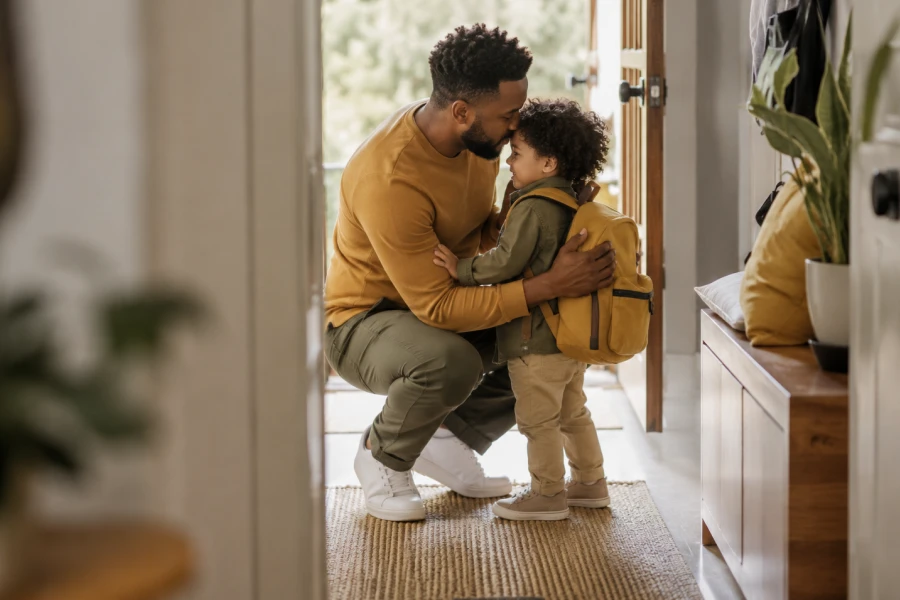
Morning separations can feel heartbreaking when your toddler clings, cries, or begs you to stay. Toddler separation anxiety is a normal developmental experience, but normal does not always feel easy. Parents may leave daycare feeling guilty, worried, and emotionally drained. Toddlers are learning that goodbye does not mean disappearance. They also need help trusting the rhythm of return. A calm pattern can make this lesson feel safer. The right routine does not erase every tear immediately. It gives your child something familiar to hold onto. Over time, predictability builds confidence. Mornings can become less dramatic for everyone.
Goodbye concentrates many big feelings into a small moment. Your toddler sees you prepare to leave and senses the transition coming. The body reacts before language catches up. Crying, grabbing, hiding, or protesting can all be communication. These reactions do not mean your child is failing. They mean the separation feels hard right now. Parents can respond with warmth and clarity. A consistent toddler separation support plan helps the moment feel more predictable. Long negotiations usually increase distress. Loving confidence works better than uncertain delay.
Repetition helps toddlers understand what comes next. A goodbye routine should be short, kind, and repeated daily. Use the same words if they comfort your child. Offer one hug, one reassuring sentence, and one clear departure. Avoid sneaking away because it can weaken trust. Your toddler needs to see that you leave and return. The routine becomes emotional evidence over time. A simple daycare drop off routine can make this evidence easier to repeat. Progress often begins with shorter recovery after goodbye. That still counts.
The separation does not begin at the classroom door. It often starts at home. A rushed morning can make anxiety louder. Build a calmer lead-in when possible. Talk about the day in simple language. Mention who will be there and when you will return. Keep the tone confident, not apologetic. Toddlers borrow emotional cues from adults. If you sound worried, they may feel less safe. A predictable morning rhythm helps your child arrive with a little more steadiness.
Confidence grows when toddlers experience manageable separations repeatedly. Each successful return becomes part of their emotional memory. Parents can support this by celebrating brave effort, not perfect calm. Say that your child did something hard. Notice when they recovered after crying. Praise connection with caregivers or peers. This helps your toddler see themselves as capable. Tools focused on toddler confidence building can support that message at home. Your child does not need to be fearless. They need to feel able to handle the goodbye.
Some loving reactions can accidentally extend anxiety. Repeated returns to the room can restart the goodbye. Long explanations can overwhelm a toddler who needs simplicity. Bribes may shift attention without building trust. Sneaking away can create more checking behavior later. Try not to judge yourself when emotions rise. Drop-off is tender work. Choose one consistent plan and practice it. Ask caregivers to support the same rhythm. Unified adults make the transition easier to understand.
Trust develops through repeated experience. Your toddler needs to feel that goodbye is real and return is reliable. Keep your message calm, brief, and loving. Let caregivers take over with confidence. Hold your own emotions gently after you leave. A practical parenting resource can help you shape daily routines around separation, recovery, and independence. Progress may look uneven at first. One easier morning may be followed by a harder one. Still, the pattern matters. With steady support, your toddler learns that connection survives distance.



Leave a comment