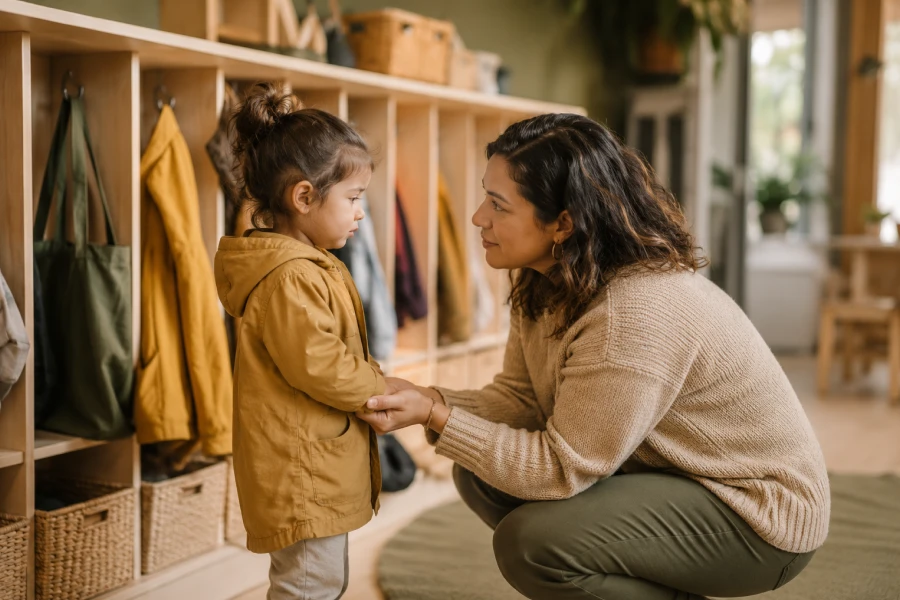
A crying toddler at drop-off can make every parent question the morning routine. Separation anxiety at daycare is not simply misbehavior or stubbornness. It is communication from a child who is still learning safety across distance. Your toddler may love the classroom and still struggle when you leave. Both things can be true. The goodbye moment asks a young child to trust memory, caregivers, and routine all at once. That is a big developmental task. Parents can help by listening to the message beneath the tears. The goal is not to remove emotion. It is to build trust through it.
Young children communicate through behavior before they can explain feelings clearly. Clinging may mean I need more reassurance. Crying may mean this transition feels too fast. Refusal may mean I do not know what comes next. Parents can respond without treating the behavior as manipulation. Hold the boundary with compassion. Your child can feel upset and still complete the transition. A focused preschool transition support approach helps parents read the moment more accurately. Understanding reduces frustration. It also makes your response more effective.
Uncertainty makes separation harder. Toddlers may not know where you go, when you return, or what happens next. Use concrete language to reduce the unknown. Tell your child the next part of their day. Name the caregiver who will help. Say when you return using a familiar routine marker. Repeat the same message daily. Familiar language becomes an emotional anchor. Parents should keep promises realistic and specific. A simple daycare drop off routine supports that predictability. Toddlers feel safer when the script stays steady.
Tears are important, but they are not the whole story. Notice what happens after you leave. Does your child recover quickly with a caregiver? Do they engage in play later? Are they eating, resting, and connecting during the day? These details matter. A child can cry at separation and still feel secure overall. Ask caregivers for patterns rather than dramatic snapshots. This gives you a fuller picture. It can also reduce unnecessary guilt. Better information helps parents choose the right support.
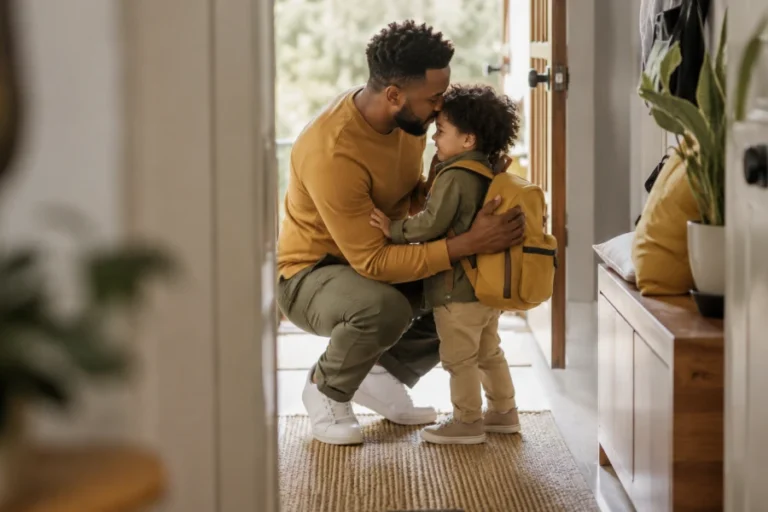
Predictable goodbyes create emotional structure. Your toddler should know what will happen each morning. Use the same short sequence. Offer warmth, state the return, connect with the caregiver, and leave. Avoid disappearing secretly. Avoid extending goodbye after the routine is finished. Both can make separation feel less clear. A practical resource for gentle goodbye ritual ideas can help families choose a pattern that fits. The goodbye may still include tears. Clarity still helps.
Some separation struggles need additional attention. Consider seeking more support when distress remains intense for long periods. Look for major changes in sleep, appetite, play, or overall mood. Talk with caregivers about what they observe after drop-off. Consult a pediatrician or child development professional if worries continue. Extra support is not a failure. It is a way to understand your child more fully. Most families benefit from teamwork. A child’s anxiety deserves care, not blame. Parents deserve support too.
Trust grows when the same safe pattern repeats. Your child experiences goodbye, caregiver comfort, daily activities, and your return. Each completed cycle teaches something important. I can feel sad and still be safe. My parent leaves and comes back. Other adults can help me. A digital parenting resource can help families make this cycle more intentional. Keep your words simple. Keep your body language steady. Keep your return warm. Over time, the message becomes familiar. The tears may soften as trust becomes stronger.

Leave a comment