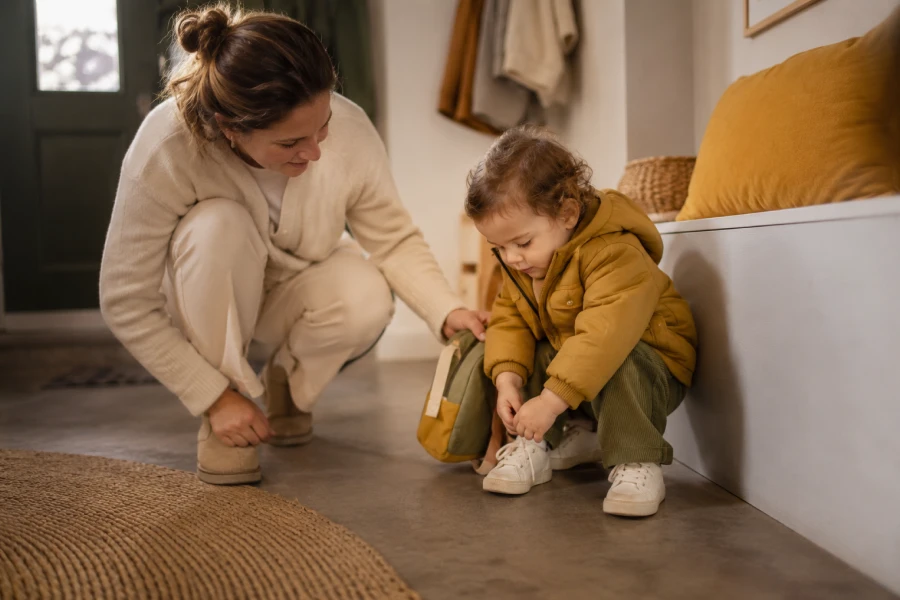
Parents often think independence starts when a child walks away happily. Gentle toddler independence actually begins earlier, inside small moments of supported practice. A toddler learns independence by feeling connected first. They need to know that comfort is available and return is reliable. This is especially true during daycare drop-offs and short separations. Pushing too hard can increase clinginess. Avoiding separation entirely can keep fear in charge. The balanced path is warm, clear, and repeatable. It helps toddlers experience themselves as capable without feeling abandoned. Independence grows best when connection stays visible.
Security is not the opposite of independence. It is the foundation. Toddlers venture further when they trust the adult relationship behind them. This trust grows through predictable responses. Comfort your child when they are upset. Then gently return to the routine. Your toddler learns that feelings can be held without stopping life completely. This balance supports emotional routines for toddlers in a practical way. Security makes brave behavior feel possible. Without it, independence can feel like pressure. With it, independence becomes exploration.
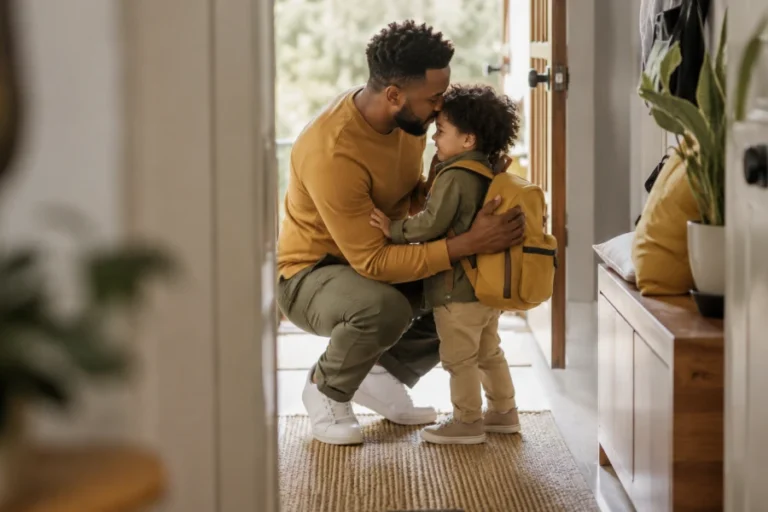
Daily transitions provide excellent practice. Moving from home to daycare, play to cleanup, or parent arms to caregiver arms all build skill. Keep directions simple and consistent. Offer limited choices when appropriate. A toddler might choose which shoes to wear or which goodbye hug comes first. Small choices create ownership. They also reduce power struggles. Parents should avoid offering choices they cannot honor. Consistency teaches trust. A calm focus on calm daycare mornings can make these transitions easier to repeat.
Toddlers need time to attempt small tasks. Rushing can turn practice into frustration. Let your child carry a backpack, hang a coat, or place a cup on the table. These ordinary actions build competence. The task may take longer than you prefer. Still, the confidence gained can help later separations. A child who feels capable in small ways may handle bigger transitions with more steadiness. Offer help without taking over immediately. Say what you notice. Pride grows when effort feels seen.
Emotional coaching helps toddlers understand independence without shame. Name the feeling in plain language. You wanted me to stay. Goodbye feels hard. Then state the routine clearly. I will come back after rest time. Your words should be warm and firm. This combination helps your child feel understood while still moving forward. A resource focused on toddler coping skills can give parents repeatable language. Toddlers learn from hearing the same calm message many times. Emotional coaching makes independence less lonely.
Pickup is a powerful time to reinforce progress. Your child may melt down after holding feelings together all day. That does not mean the day went badly. It may mean they feel safe enough to release. Offer connection first. Then mention one brave moment from the day. Keep praise specific and believable. You walked in with your teacher. You played after goodbye. You waited for me and I came back. These reflections help your toddler build a story of capability. The story matters.
Kind consistency helps independence last. Your toddler should not feel tricked, rushed, or shamed into separating. They should experience a pattern that makes sense. The goodbye happens. A trusted adult stays. The parent returns. A practical parenting tool can help families shape that pattern with less guesswork. Keep practicing in small ways outside daycare too. Short separations with familiar adults can build confidence. So can simple household responsibilities. Over time, independence becomes less dramatic. Your child learns that they can move outward and still belong.


Leave a comment